Tuesday, 29 January 2013

Friday, 11 January 2013
Dogs
We’ve seen posts about
sharks to peacocks, but I think its time to mention the “mans best friend”..
Yes the dog.
1 in 3 families own a dog in
America
Having
a dog as a pet does have its major responsibilities though, taking a lot of
time and effort. They need excessive attention, cleaning, grooming in which
owners must be prepared to offer.

(image source:http://reigningcatsdogs.blogspot.com.au/2012/03/socializing-your-new-puppy.html)
Regardless,
at the end of the day it is worth every second of your time just to have that
companionship.
(MERVE GENEL)
Chimpanzee
Chimpanzees are mammals like humans.
And whats most fascinating about that is that they share a common ancestor with humans and have very similar features of humans. By analysing the hands and feet of a chimpanzee you can tell there are many similarities between humans and chimpanzees.
They also share about 98% of human genetic material which is the closest an animal is in relation to humans. Chimpanzees usually group themselves together of about a dozen or so, and are usually found in the African rainforest, woodlands and grasslands. From studying chimpanzees, they usually consume fruit and plants, but they can also consume eggs and insects.

Things that interest me about chimpanzees are their methods of catching insects. They tend to use sticks to pick out insects from hole in trees or from holes in the ground. Chimpanzees can walk on their bare knuckles by clenching them into a fist and supporting themselves by pressing them into the ground. They are very athletic and are lot more agile than most other mammals. Chimpanzees have amazing upper body strength which allows them to swing from tree to tree.
Chimpanzees are also quite intelligent as they have the ability to memorise locations and patterns of numbers they have been previously shown.
(DANIEL CHAND)
And whats most fascinating about that is that they share a common ancestor with humans and have very similar features of humans. By analysing the hands and feet of a chimpanzee you can tell there are many similarities between humans and chimpanzees.
They also share about 98% of human genetic material which is the closest an animal is in relation to humans. Chimpanzees usually group themselves together of about a dozen or so, and are usually found in the African rainforest, woodlands and grasslands. From studying chimpanzees, they usually consume fruit and plants, but they can also consume eggs and insects.

(image source: http://animals.nationalgeographic.com.au/animals/mammals/chimpanzee/)
Things that interest me about chimpanzees are their methods of catching insects. They tend to use sticks to pick out insects from hole in trees or from holes in the ground. Chimpanzees can walk on their bare knuckles by clenching them into a fist and supporting themselves by pressing them into the ground. They are very athletic and are lot more agile than most other mammals. Chimpanzees have amazing upper body strength which allows them to swing from tree to tree.
Chimpanzees are also quite intelligent as they have the ability to memorise locations and patterns of numbers they have been previously shown.
(DANIEL CHAND)
Wednesday, 9 January 2013
Tigers
I have personally been interested in tigers since I watched the film ‘Life of Pi’. The tiger is one of the largest cat species, reaching a total length of up to 3.3 metres and weighing up to 306kg. It is most recognisable by its dark vertical stripes over its orange fur. Tigers are extremely territorial and generally solitary but social animals, often requiring large areas of habitat where food requirements can be supported. This, coupled with the fact that they are indigenous to some of the most densely populated places on Earth, such as India, has caused significant conflicts between tigers and humans.

(image source: http://en.wikipedia.org/wiki/File:Tiger_in_Ranthambhore.jpg)
In a poll conducted by Animal Planet of more than 50,000 viewers, the tiger was voted the world’s favourite animal, narrowly beating the dog. Animal behaviorists put this down to the fact that people can admire and relate to the tiger, as it is fierce and commanding on the outside, but noble and discerning on the inside. Callum Rankine, international species officer at the World Wildlife Federation (WWF) conservation charity, said the result of the Animal Planet survey gave him hope since if people are voting tigers as their favourite animal, it means they recognize their importance and hopefully the need to ensure their survival.
Click the following link for information about further information about tigers and conservation projects…
http://www.21stcenturytiger.org/
(BEN TAYLOR)
Tuesday, 8 January 2013
Indian Peacock (AKA Peafowl)
When it comes to beautiful, and colourfully vibrant animals nothing can even remotely compare to the Indian peacock. The Indian pea cock is known for its train, which when extended opens to show a semi circle of its colourful feathers, adult males train consist of feathers which are green and blue. The adult females train consists of feathers which are dull green, brown and grey, whereas a child peacocks train is dull green, and yellow. The India peacock is most commonly found in south Asia, and as the name suggests it is the official national bird of India, as it is intrinsic to the Indian province of Punjab.
The peacock is an omnivorous bird, however it mostly feeds on plants, flower petals, small insects and reptiles. The peacock is a sacred bird in Hindu culture, it is well known as the loyal bird of Lord Karthikeya ( The God of War) and son of Shiva, referenced to in the “Mahabharata”.


(MOHAMMAD AZHAR)
The peacock is an omnivorous bird, however it mostly feeds on plants, flower petals, small insects and reptiles. The peacock is a sacred bird in Hindu culture, it is well known as the loyal bird of Lord Karthikeya ( The God of War) and son of Shiva, referenced to in the “Mahabharata”.

Train Closed
(image source: http://upload.wikimedia.org/wikipedia/commons/7/77/Indian_Peacock_I3_IMG_9656.jpg)

Train Opened
(image source: http://us.123rf.com/400wm/400/400/shawnhempel/shawnhempel1006/shawnhempel100600025/7136089-beautiful-indian-peacock-with-fully-fanned-tail.jpg)
(MOHAMMAD AZHAR)
Monday, 7 January 2013
Redback Spider
Time for one of the creepy crawlys...yes it's the Redback Spider...
What is fascinating about the Redback spider is the fact that it is an Arachnid. An arachnid is defined as an animal that have exoskeletons. These are broken into 2 body sections which have no backbone and 8 legs attached to the body.
Redback Spiders are considered one of the most venomous spiders in Australia. Interestingly, the redback spiders can be sexually cannibalistic.This involves the female consuming the male counterpart if he has not satisfied her during the males mating dance (which should presumably go for 100 minutes)

After reviewing the Redback Spider, one thing that interests me about it the most is the obvious look of the spider; well known for the red stripe across the back, its very bright and obvious stripe on the back of the spider defines its deadliness. Redbacks are fairly aggressive. Their hunting methods and sexual cannibalism which I had mentioned earlier are one of the key reasons why I like the redback spider.
Here is a good video which shows you how the female can eat the male counterpart up if she is displeased.
http://www.youtube.com/watch?v=ojDCmlhBhxw
(DANIEL CHAND)
What is fascinating about the Redback spider is the fact that it is an Arachnid. An arachnid is defined as an animal that have exoskeletons. These are broken into 2 body sections which have no backbone and 8 legs attached to the body.
Redback Spiders are considered one of the most venomous spiders in Australia. Interestingly, the redback spiders can be sexually cannibalistic.This involves the female consuming the male counterpart if he has not satisfied her during the males mating dance (which should presumably go for 100 minutes)

(image source: http://museumvictoria.com.au/spidersparlour/spider13.html)
After reviewing the Redback Spider, one thing that interests me about it the most is the obvious look of the spider; well known for the red stripe across the back, its very bright and obvious stripe on the back of the spider defines its deadliness. Redbacks are fairly aggressive. Their hunting methods and sexual cannibalism which I had mentioned earlier are one of the key reasons why I like the redback spider.
Here is a good video which shows you how the female can eat the male counterpart up if she is displeased.
http://www.youtube.com/watch?v=ojDCmlhBhxw
(DANIEL CHAND)
Sunday, 6 January 2013
Tyrannosaurus Rex (T-Rex)
It’s amazing to know that hundreds of years ago there were
once giant reptiles, known as dinosaurs with tiny brains who “ruled the earth”.

Out of all the dinosaurs, the one who is at the top of the
food chain is tyrannosaurus rex (also known as T-rex). T-rex was one of the
largest carnivores ever, standing at 12m long and 6m tall and weighing at
around 7000 pounds.

(image source: http://www.cosmostv.org/2011/10/t-rexs-weight-topped-9-tons.html)
Through scientific research it is believed that the T-rex was
so powerful it could eat up to 500 pounds (230 kg) of meat in one bite. Not
only is that an excessive amount of food in one bite, T-rex also used to crush
and break the bones of the animals it used to eat.
So if you are terrified of bears, sharks, lions or any other
living animal in today’s society, then thank god that you were not alive during
the time of T-rex.
Because many of these facts about dinosaurs are through
their remains in fossils and through extreme scientific research, not many
people believe in the existence of them. But personally, I think it is
astonishing to know that there were such creatures that touched the same soil
we do, everyday.
(MERVE GENEL)
(MERVE GENEL)
Saturday, 5 January 2013
Kangaroo
And now for the Australian superstar, the kangaroooooo!!
A kangaroo is a marsupial native to Australia. They have large, powerful hind legs and feet adapted for the hopping motion they use to move around. Their long, muscular tail also serves to help keep them balanced.
You might think they're cute and cuddly, if you ever cross by one... but watch out, because they have the ability to cause serious harm to people, when they feel threatened. Like most marsupials, females have a pouch in which children (joeys) complete their development.

Larger kangaroos have adapted much better to changes brought to the Australian landscape by humans, and though many of their smaller relatives are endangered, there is still an abundance of all kangaroo species. They are not farmed at all, but wild kangaroos are shot for their meat, leather hides, and to protect grazing land for sheep and cattle.
The kangaroo as you can assume is a great symbol of Austrailia. You can see this as they appear on the Australian coat of arms, on some currency, and also by some of Australia’s well known organisations, including Qantas and the Royal Australian Air Force. The kangaroo is important to both Australian culture and our national image.


Click the following link to see a video of kangaroos boxing : http://www.youtube.com/watch?v=AiTG6T9pTcM
(BEN TAYLOR)
A kangaroo is a marsupial native to Australia. They have large, powerful hind legs and feet adapted for the hopping motion they use to move around. Their long, muscular tail also serves to help keep them balanced.
You might think they're cute and cuddly, if you ever cross by one... but watch out, because they have the ability to cause serious harm to people, when they feel threatened. Like most marsupials, females have a pouch in which children (joeys) complete their development.

(image source: http://museumvictoria.com.au/melbournemuseum/discoverycentre/wild/victorian-environments/mallee/red-kangaroo/)
Larger kangaroos have adapted much better to changes brought to the Australian landscape by humans, and though many of their smaller relatives are endangered, there is still an abundance of all kangaroo species. They are not farmed at all, but wild kangaroos are shot for their meat, leather hides, and to protect grazing land for sheep and cattle.
The kangaroo as you can assume is a great symbol of Austrailia. You can see this as they appear on the Australian coat of arms, on some currency, and also by some of Australia’s well known organisations, including Qantas and the Royal Australian Air Force. The kangaroo is important to both Australian culture and our national image.


(image source: http://boardsandgovernance.blogspot.com.au/2012/04/ipads-for-qantas.html & http://en.wikipedia.org/wiki/File:Australian_Coat_of_Arms.png)
Click the following link to see a video of kangaroos boxing : http://www.youtube.com/watch?v=AiTG6T9pTcM
(BEN TAYLOR)
Friday, 4 January 2013
Swordfish
Sharks do not scare me; however the sea animal which does make me shiver is the Swordfish. The Swordfish derives its name from the shape of its ‘bill’ which resembles a sword, contrary to popular belief this sharp bill is not used to stab its prey but to slash and wound the prey making it weaker and easier for the swordfish to devour.
Swordfish can reach up to 4.5 metres in length, and weigh up to 500kg, Swordfish mature at 4-5 years of age, and typically have a lifespan of 7-8 years of age meaning that they spend most of their time growing. Another interesting phenomenon about swordfish is that female fishes are larger than males. Swordfishes are in abundance and they have the lowest conservation status, as such they prevalent in large numbers.
Swordfishes typically do not threaten humans like sharks, as humans are not a source of food for swordfishes, however swordfishes have stabbed and slashed humans in the past, resulting in death.

Swordfish can reach up to 4.5 metres in length, and weigh up to 500kg, Swordfish mature at 4-5 years of age, and typically have a lifespan of 7-8 years of age meaning that they spend most of their time growing. Another interesting phenomenon about swordfish is that female fishes are larger than males. Swordfishes are in abundance and they have the lowest conservation status, as such they prevalent in large numbers.
Swordfishes typically do not threaten humans like sharks, as humans are not a source of food for swordfishes, however swordfishes have stabbed and slashed humans in the past, resulting in death.

(image source:https://blogger.googleusercontent.com/img/b/R29vZ2xl/AVvXsEjBwhsetNs0W2o5WrnWGs8OsdGjYZAOI1CzJSiTayp4AloeOdGwJsB8qkb908VNHAWfPlN92ZN4zcIlussbu3aovZ4ufKMWU_scQYfMvhJf8zxCaK7v4Mbmk4YIzJhDKDDLNhvVYRJ7Qyg/s1600/swordfish.jpg)
(MOHAMMAD AZHAR)
Thursday, 3 January 2013
Panda
When it comes to cute and cuddly nothing beats The Panda, also known as The Giant Panda they are an endangered species with approximately 1600 to 3000 Pandas (hard for scientists to determine due to the Panda’s remote habitats) in the wild and 300 in zoos. Wild Panda’s almost exclusively residing in remote mountainous and snowy regions in China’s Sichuan province. The wild Panda’s diet consists primarily of Bamboo, however Panda’s also eat sugar cane, small insects, and other vegetables. Panda’s fulfil most of their water needs through the moisture of the bamboo which they consume.
A male adult Panda can reach up to 6 feet in height and weigh up to 250-300 pounds, cubs are between 3-5 Pounds at birth, and are born without hair (they are pink), and blind, as such they require significant attention from their mother. Panda’s importance in pop culture has significantly increased since the release of the movie ‘The Kung Fu Panda’. This has had a positive impact upon conservation of the Panda, so please help save the ever so cute and cuddly panda.

Please visit the following website to see how you can help save the Panda
http://wwf.panda.org/what_we_do/endangered_species/giant_panda/panda/why_we_save_the_giant_panda/
(BEN TAYLOR)
A male adult Panda can reach up to 6 feet in height and weigh up to 250-300 pounds, cubs are between 3-5 Pounds at birth, and are born without hair (they are pink), and blind, as such they require significant attention from their mother. Panda’s importance in pop culture has significantly increased since the release of the movie ‘The Kung Fu Panda’. This has had a positive impact upon conservation of the Panda, so please help save the ever so cute and cuddly panda.

(image source: http://www.beijingxiantour.com/wp-content/uploads/2010/08/Cute-Panda.jpg)
Please visit the following website to see how you can help save the Panda
http://wwf.panda.org/what_we_do/endangered_species/giant_panda/panda/why_we_save_the_giant_panda/
(BEN TAYLOR)
Wednesday, 2 January 2013
Thorny Devil
The Thorny Devil is a lizard from the reptile class. It is mostly found in the remote desert landscapes of the Australian Outback where the weather is dry and humid. The thorny devil has a couple of other names it is known by, namely the Mountain Devil and Thorny Dragon. Being a fairly small lizard (it grows to about 20cm in length), it can be quite vulnerable to predators in the desert. For that reason, the thorny devil is a palette of shades between orange and brown.
I like the thorny devil for its ability to camouflage into its surrounding environment and be able to hide throughout the day and become darker during the night. Because of this, it can avoid predators.

As the name suggests, the lizard is ‘thorny’; in other words, its entire body is covered in spikes or thorns which adds to its defence mechanisms. These thorns make it hard to be eaten and if attempted it won’t be a tasty meal. It looks a bit like stalagmites growing out of a crocodile (only smaller)
(DANIEL CHAND)
I like the thorny devil for its ability to camouflage into its surrounding environment and be able to hide throughout the day and become darker during the night. Because of this, it can avoid predators.

(image source: http://www.wild-facts.com/2010/wild-fact-858-a-thorn-in-my-side-thorny-devil/)
As the name suggests, the lizard is ‘thorny’; in other words, its entire body is covered in spikes or thorns which adds to its defence mechanisms. These thorns make it hard to be eaten and if attempted it won’t be a tasty meal. It looks a bit like stalagmites growing out of a crocodile (only smaller)
(DANIEL CHAND)
Tuesday, 1 January 2013
Myrmecia (AKA Bulldog Ant)
Bull/Bulldog Ants are most commonly found in the Australian Outback, they are called bulldog ants due to their ability to severely bite, and sting anything which threatens them. The bite of bull ants if left untreated can be fatal for many individuals with anaphylactic reactions. Bull ants diet consists primarily of small insects, nectar, fruits, and gum.
Bull ants are very rarely collected into ant farms due to the danger they present to humans, however the behaviours of bull ants are very different to those of normal ants. For instance certain species of bull ants do not have any colony workers, the queen invades and kills the queen of another colony and becomes the queen.

Another interesting phenomenon about bull ants is that when cut in half, the head and the tail will begin to fight each other, usually both halves die within the first few minutes. However experiments conducted have shown these battles to last up to half an hour. Although an interesting animal, caution is required around Bull Ants, so if you wish to observe the behaviours of a bull ant please do so from a safe distance, as the bull ant can stalk its threat, and prey from up to a metre away.
(MOHAMMAD AZHAR)
Bull ants are very rarely collected into ant farms due to the danger they present to humans, however the behaviours of bull ants are very different to those of normal ants. For instance certain species of bull ants do not have any colony workers, the queen invades and kills the queen of another colony and becomes the queen.

(image source: http://www.flickr.com/photos/burtonandy/5387284840/)
Another interesting phenomenon about bull ants is that when cut in half, the head and the tail will begin to fight each other, usually both halves die within the first few minutes. However experiments conducted have shown these battles to last up to half an hour. Although an interesting animal, caution is required around Bull Ants, so if you wish to observe the behaviours of a bull ant please do so from a safe distance, as the bull ant can stalk its threat, and prey from up to a metre away.
(MOHAMMAD AZHAR)
Sharks
Most people are afraid of sharks, which is
reasonable, due to their large mass size, ripping killer teeth and their
constant media attention which categorise sharks as “vicious animals”.

The
thought or even the sight of a fin gliding through the waters is enough to make
people panic and cry for help.
However, I do believe that there is more to this
‘blood driving’ animal, than meets the eye…
Sharks are certainly not as dangerous as people
believe they are. The main diet of sharks is seals and turtles
(defiantly not humans). The reasons why sharks do attack humans are due to
mistaken identity. The wet suit of surfer represents the shininess of
a seal's skin while people lying on surfboards and paddling could to resemble a
turtle to sharks.
However, when sharks do discover their mistake,
they just swim away. It has been said that they do not like the taste of human
flesh.

(image source: http://theconversation.edu.au/cull-or-be-killed-is-this-really-the-solution-to-stop-shark-attacks-3961)
A recent study has also shown that in one year there were 8 people
attacked by sharks and there were more than 1 million sharks killed by people… So
tell me who should be more afraid of who?
(MERVE GENEL)
Friday, 28 December 2012
Horses
If you want to discuss the most practical animal in world, it has to be the horse. The history of horses dates back to 4000BC, with domesticated use beginning in 3000BC, and ending for most of the world in the 1950’s (introduction of the car). Whether you believe it or not throughout history, horses, and horse drawn carriages have been the most commonly used form of transportation.

(image source: http://horsebreedsinfo.com/)
Due to their prolonged use as domesticated animals, there are few horses found in the wild. Although domesticated horses are not usually kept as pets due to their large size, and maintenance needs. However, they make great companions due to their long life span (22-25 years), tamed nature, and free spirits; a horse is an ideal pet for a family residing on a farm or with access to a stable. Anatomically speaking horses are masculine animals, horses are large animals an adult male horse can become up to 183cm tall, and can weigh up to 1000kg.
Fun Fact: Horses are able to sleep even whilst standing up!
(MOHAMMAD AZHAR)
Thursday, 27 December 2012
African cichlids
When it comes to fish, the most interesting and amazing fish that catches my eye is the African cichlids. These fish look absolutely amazing, through their different shades of colours and patterns.
However, don't let their looks fool you...
African cichlids are considered one of the most territorial fresh water fish for anyone to have as a pet, they are quite aggressive and some actually grow a thin line of teeth which would be a little uncomfortable for pet owners who clean their fish tanks.
They also have major issues in regards to dwelling with other fish such as gold fish, angel fish and other fish in the fresh water community.
So, if you are considering purchasing this amazing fish for your fish tank, be sure to place it with other African cichlids. One upside of owning a African Cichlids is that they are very adaptable to a tanks environment, and can adapt if the tank is clean or not.
The pictures below are some of the African cichlids I have had and have at the moment.


(image source: http://www.cichlid-forum.com/articles/african_cichlid_genus_gallery.php)
To find out more please click here
(DANIEL CHAND)
Wednesday, 26 December 2012
Lion
If you like cats (see post below), then
wait till you see these guys…
A fully grown lion can exceed 250kg
in weight, and is the largest of all natural living cats. The lion is one of
the most powerful animals in the world and is the undisputed ‘king of the
jungle’. Lions defend their pride aggressively, and may consistently lead the
defence against intruders if this is their role within the pride. You do not
want to come up against one of these!

(image source: http://en.wikipedia.org/wiki/File:Lion_waiting_in_Namibia.jpg)
However, this isn’t to say lion’s
don’t have a sweet side. Take Christian the lion, who was purchased in a London
department store as a cub by Australians John Rendall and Anthony Bourke. After
growing up with the two men and living with them for a number of years (including
driving around in their Mercedes!), he grew too big and they made the decision
to release him into the wild in his native Africa.


One year later, the former owners
decided to go looking for Christian, even though they were told he would not
remember them. I almost cried when I saw this video…
(BEN TAYLOR)
(BEN TAYLOR)
Sunday, 23 December 2012
Cats & Kittens
There
is always debates whether someone is a dog person or cat person, when it comes
to me, as much as I love dogs, I have more of a soft spot for cats (kittens to
be specific). Their cute tiny paws,
adorable baby face, to their soft fur, kittens are one of the cutest animals I would
love to own.

Not only do they purr when you rub behind their ears, but guarantee they will always fall asleep in your arms, wherever they feel most loved. Cats are also the one animal which is the cleanest and easiest animal to take care of. They do not need constant attention and also do not have to be always at your sight, but you know at the end of the day, regardless where they disappear to, they will return home and to their owner where they belong.
(MERVE GENEL)

(image source: http://www.thedogtrainingsecret.com/blog/introduce-dog-kitten/)
(MERVE GENEL)
Welcome to Animals Lovers
Do you have a passion for animals? From the Bengal tiger in the rain forests of South-East Asia to your home pet canine.. Then this is the blog for you.. This is a blog where there will be regular posts on all different types of animals great and small.
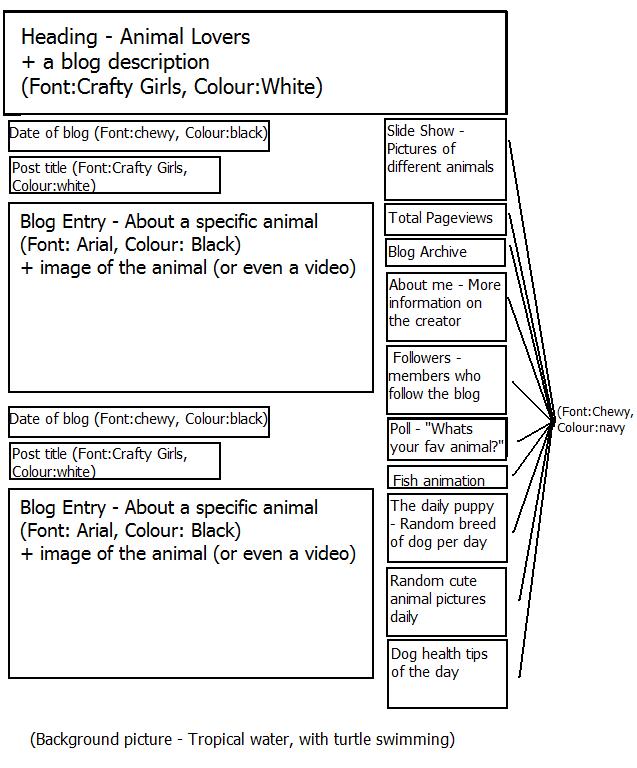
Each blog post will consist of a image of the specific animal, and may even include a video for your entertainment.. The cool gadgets on the right hand side of the blog will also keep you coming back for more everyday, as they consistently change with facts and images daily.
The image below will allow you to see the blog in a visual perspective.
(By: Merve Genel, Daniel Chand, Ben Taylor & Mohammed Azhar)
Subscribe to:
Posts (Atom)